When Can Babies Drink Water + 6 Signs of Dehydration You Need to Know
An important reminder:
This post and anything on this website is for educational purposes only. It should not be used as medical advice or in place of or to delay seeking medical attention. Viewing, interacting with, or following this website, its content or affiliations, does not establish a provider-patient relationship. Additionally, the education provided on this account is made with typically developing children in mind. Your child may have different development and medical needs. Your child’s provider can help you figure out the best management plan for your specific situation.
It's getting hot out there, and if you're anything like the moms in my DMs right now, you've got two questions on repeat this summer: "Can I give my baby water?" and "How do I know if my kid is dehydrated?" So let's talk through both, because once it's hot and humid and everyone's sweatier and crankier than usual, this stuff matters more than you'd think…. and let me share it becasue I know you are wodnering it, and I just want you to know, you aren’t the only one.
When Can Babies Have Water?
Here's the short version, and then I'll explain the why behind it.
Under 6 months:
No plain water on its own. Their tiny bodies just aren't ready for it yet, and offering water can actually crowd out the breastmilk or formula they need for nutrition and hydration. Too much water at this age can also throw off their electrolyte balance, which can lead to something as serious as seizures. So for babies under 6 months, breastmilk or formula is the move.
And while we're on it: don't water down formula to stretch it further or “give them a little more water” because you’re concerned they are too hot. Always mix formula exactly as directed on the can or box. That ratio is there for a reason.
Around 6 months
Once you start solids, you can offer a small amount of water in an open cup, sippy cup, or straw cup. The American Academy of Pediatrics recommends no more than 4 to 8 ounces a day at this stage. This isn't about hydration yet, it's about practice. You're building cup-drinking skills and getting your baby familiar with the taste of water. Breastmilk and formula are still doing the heavy lifting for hydration.
After 12 months
water becomes a regular part of the day. The AAP's general guidance is around 1 to 4 cups a day between 12 and 24 months, alongside whatever milk your family is offering after weaning off formula.
I'll also say this gently, because it's easy to swing the other direction once you get the green light to offer water: more water isn't automatically better. Water intoxication is uncommon, but it's real, and I'd rather you know what to watch for than not. Signs include
nausea
fatigue
vomiting
an unusually high number of wet diapers (think more than 8 in a day)
confusion
or a noticeable change in behavior. If something feels off, call your pediatrician.
Want a little visual guide that lay out when to start solids, alongside when to add allergens and how to balance bottles, naps, and meals as you start solids? Grab my free Feeding Schedules for Starting Solids. It walks you through 6 to 12 months step by step so you're not guessing at any of it
Signs of Dehydration in Babies and Kids
This is the one I want you to actually save, because dehydration sneaks up fast in little bodies, and it ramps up even faster once the temps climb or when they are sick.
Mild to Moderate Dehydration
fewer than 4-6 wet diapers in a day,
a dry or sticky mouth
fewer tears when they're crying
a soft spot that looks more sunken than usual
fewer bowel movements (unless diarrhea is the cause)
and just an overall "off" energy, like they're playing less than they normally would.
Severe dehydration
Is a different level of urgency and I want you to act quickly
less than 3 wet diapers in a whole day
extreme fussiness or
extreme sleepiness
sunken eyes
skin that looks wrinkly
or hands and feet that feel cool and look a little discolored.
If you're seeing any of these, this is a call-the-pediatrician-or-go-to-urgent-care moment, not a wait-and-see one.
I always tell parents in my classes, you don't need to memorize a chart in the moment. You need to know the few signs that matter most and trust your gut when something feels different about your kid.
Tips to Prevent Dehydration This Summer
Keep your baby and kiddo cool. Air conditioning breaks during outdoor play, shaded areas, and avoiding direct sun entirely for babies under 6 months go a long way.
Offer fluids often, not just when someone asks for them. For babies under 12 months, breastmilk or formula are still their main source of hydration. Babies under 6 months should stick to breastmilk or formula only, no water. Toddlers and older kids do best with small sips of water offered frequently throughout the day, even if it's just a few sips at a time.
A good UV sun hat and a portable fan make this so much easier in practice, especially for stroller walks or time at the park. I keep both in my diaper bag all summer.
For toddlers and older kids, popsicles and water-rich fruits like watermelon and cucumber count too. They're an easy win on a day when your toddler is "too busy" to sit down and drink from a cup.
A cup that actually gets your toddler to drink more matters more than you'd think. If your kid refuses every cup you hand them, try a fun cup to get them excited about it
I've put together my favorite sun safety and hydration picks (hats, fans, popsicle molds, cups that toddlers actually use) in one place so you don't have to go hunting. You can find that list here: [AFFILIATE LINK: Amazon Sun Safety + Hydration List].
And be on extra high alert if your little one is also sick. Fever, vomiting, and diarrhea all increase fluid loss and raise the risk of dehydration fast, which is exactly when those early signs above matter most.
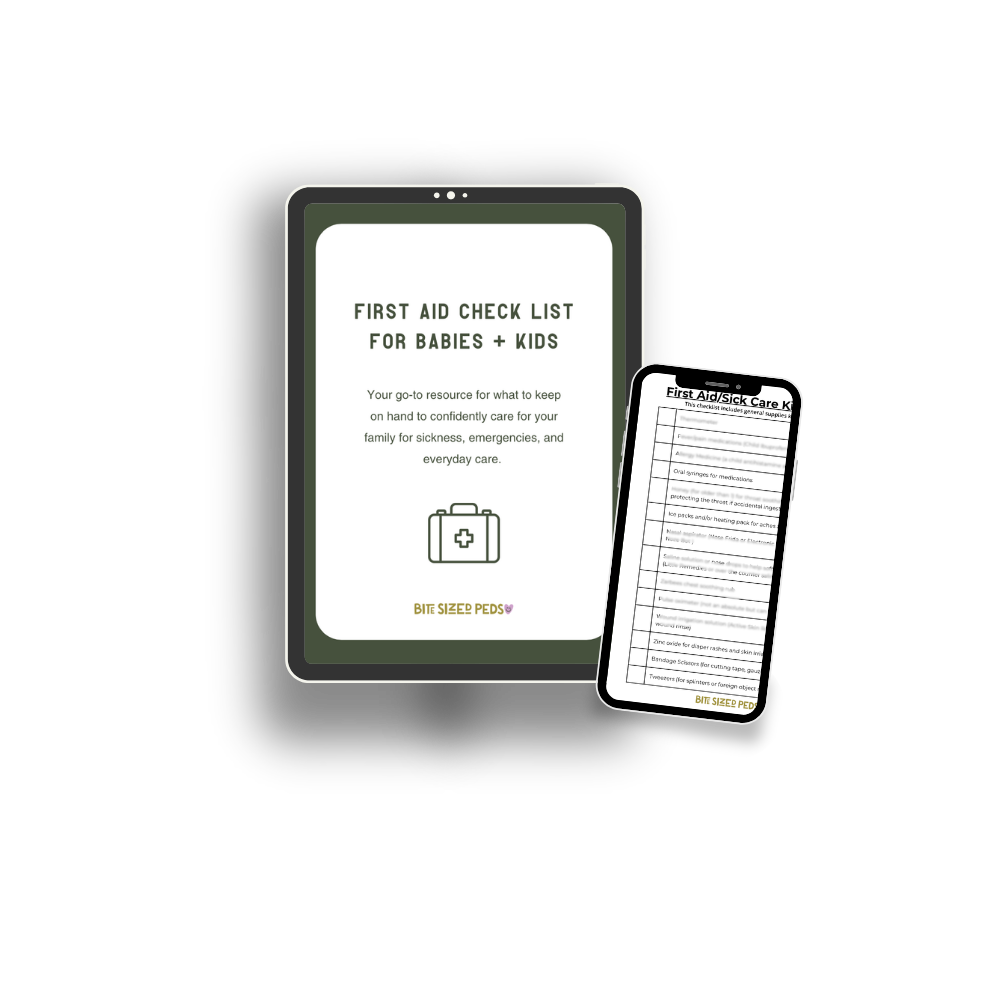
If you want one place to keep everything you need for sick days and emergencies, fevers, dehydration, and the rest, my free First Aid and Sick Care Kit Checklist tells you exactly what to have on hand so you're not scrambling at 2am.
Before you go
Knowing the signs of dehydration is a great first step, but real confidence comes from knowing what to do for the full range of "what ifs," fevers, breathing emergencies, choking, and everything in between. That's exactly what we build together in our Baby & Child CPR + Choking + First Aid classes, available in person or virtually. You walk away knowing what's an emergency, what you can manage at home, and when to make the call.
Have the best (and most hydrated) summer ever! If you aren’t local or would rather take one of our classes virtually and self-paced, join the waitlist here and you’ll be the first to know about our digital Pediatric First Aid and Sick Day Course when it drops. JOIN THE WAITLIST HERE
-
Medical/General: The content, information, opinions, and suggestions listed here have been created with typically developing children and babies in mind. The information here is generalized for a broad audience. The information here should by no means be used as a substitute for medical advice or for any circumstance be used in place of emergency services. Your child is an individual and may have needs or considerations beyond generally accepted practices. If your child has underlying medical or developmental differences, including but not limited to prematurity, developmental delay, sensory processing differences, gastrointestinal differences, cardiopulmonary disease processes, or neurological differences, we strongly recommend you discuss your child's plan with the child's doctor, health care provider. By accessing this site and the information in it, you acknowledge and agree that you are accepting responsibility for your child’s health and well-being. By using and accepting the information on this site, the author (Cierra Crowley) is not responsible for any adverse effects or consequences resulting from the use of any suggestions discussed. It is important to talk to your child’s pediatrician or medical provider to start anything new or make any changes.
Affiliation: this page contains affiliate links from which I can earn small commissions (at no additional cost to you).
-
American Academy of Pediatrics. (2023). Recommended drinks for children age 5 & younger. HealthyChildren.org. https://www.healthychildren.org/English/healthy-living/nutrition/Pages/recommended-drinks-for-young-children-ages-0-5.aspx
American Academy of Pediatrics. Choose water for healthy hydration. HealthyChildren.org. https://www.healthychildren.org/English/healthy-living/nutrition/Pages/Choose-Water-for-Healthy-Hydration.aspx
American Academy of Pediatrics. How to safely prepare formula with water. HealthyChildren.org. https://www.healthychildren.org/English/ages-stages/baby/formula-feeding/Pages/how-to-safely-prepare-formula-with-water.aspx
American Academy of Pediatrics. Signs of dehydration in infants & children. HealthyChildren.org. https://www.healthychildren.org/English/health-issues/injuries-emergencies/Pages/dehydration.aspx